(323) 310-1137 Menu

THD, or Transanal Hemorrhoidal Dearterialization, is a minimally invasive, suture-based hemorrhoid treatment that uses Doppler ultrasound guidance instead of tissue excision. Dr. Zuri Murrell performs THD regularly at his Beverly Hills and Los Alamitos practices as a core part of his hemorrhoid care.


A Minimally Invasive Option From Dr. Zuri Murrell

Dr. Murrell is a double board-certified colorectal surgeon and Director of the Colorectal Cancer Program at Cedars-Sinai in Los Angeles, and THD is a significant, frequently used part of his hemorrhoid treatment practice in Beverly Hills. He offers THD because it treats hemorrhoids at their source, the blood vessels feeding them, without cutting away tissue.

For patients in Los Angeles and Beverly Hills who want an effective, lower-pain alternative to traditional hemorrhoid surgery, Dr. Murrell tailors THD to each patient's grade of hemorrhoidal disease and degree of prolapse.

How THD Corrects Hemorrhoid Prolapse

Many patients with advanced hemorrhoids also have prolapse, meaning the hemorrhoidal tissue has stretched and dropped down toward or through the anal opening. THD addresses this with an additional step called mucopexy, in which Dr. Murrell places a continuous suture to lift the prolapsed tissue and stitch it back into its normal anatomical position.

Combining dearterialization with mucopexy allows THD to treat both the blood supply driving hemorrhoid symptoms and the physical prolapse itself in a single procedure, which is one reason Dr. Murrell recommends it for patients with more advanced, prolapsing hemorrhoids.

Benefits of THD

Patients considering THD in Los Angeles often ask how it compares to older hemorrhoid procedures. Key benefits include:

  • Doppler precision. Blood vessels are located with ultrasound guidance rather than estimated, so ligation is targeted to the exact source of the problem.
  • No tissue excision. THD does not cut away hemorrhoidal tissue, which supports a gentler recovery.
  • Treats prolapse directly. The mucopexy component repositions prolapsed tissue rather than only addressing blood flow.
  • Significantly less pain than traditional hemorrhoidectomy. Because the procedure avoids excision, Dr. Murrell has found patients typically experience considerably less post-operative pain than with a conventional hemorrhoidectomy.
  • Outpatient recovery. THD is performed on an outpatient basis, and patients typically go home the same day.

Why Choose Dr. Murrell for THD in Los Angeles

Dr. Murrell is one of the few colorectal surgeons on the West Coast specifically trained in minimally invasive colorectal surgery, and THD reflects that focus: an advanced, technique-driven approach rather than a one-size-fits-all surgery. He performs THD often enough that it has become one of the surgical options he most commonly recommends for patients with prolapsing or higher-grade hemorrhoids.

Beyond his experience with THD specifically, Dr. Murrell's broader credentials support his approach to hemorrhoid care:

  • Director of the Colorectal Cancer Program at Cedars-Sinai
  • Double board-certified in colorectal surgery and general surgery
  • Fellowship-trained in colorectal surgery at Cedars-Sinai Medical Center and in laparoscopic colorectal surgery at UC Irvine
  • Voted a Top Doctor for Colon and Rectal Surgeries every year since 2015
ZM logo

Schedule a Consultation

Schedule Appointment

What to Expect With THD

Consultation and Diagnosis. Before recommending THD, Dr. Murrell confirms the diagnosis and grade of your hemorrhoids, typically through an in-office exam and, when appropriate, a colonoscopy to rule out other causes of your symptoms. This step ensures THD, rather than another hemorrhoid treatment, is the right fit for your specific presentation.

The Procedure. THD is performed on an outpatient basis. Dr. Murrell inserts the Doppler-equipped anoscope to locate the hemorrhoidal arteries by their ultrasound signal, then ligates each vessel with suture. If prolapse is present, he performs the mucopexy step in the same procedure, lifting and securing the prolapsing tissue back into place. There is no cutting or removal of tissue at any point in the process.

Recovery and Results Timeline. Patients undergoing THD typically return home just a few hours after the procedure. Most resume normal daily activities within about four days, a notably shorter timeline than the recovery typically associated with a traditional hemorrhoidectomy.

Schedule a THD Consultation in Los Angeles or Beverly Hills

If you're dealing with internal hemorrhoids or hemorrhoidal prolapse and want to learn whether THD is right for you, schedule a consultation with Dr. Zuri Murrell. Call (323) 310-1137 to book an appointment at either the Beverly Hills or Los Alamitos office.

THD FAQ's

Is THD painful?

THD involves significantly less pain than a traditional hemorrhoidectomy, according to Dr. Murrell, largely because no tissue is excised during the procedure. Some post-procedure discomfort is normal, and Dr. Murrell will discuss pain management as part of your recovery plan.

How long is THD recovery?

Most patients return home the same day and resume normal activities within about four days, though individual recovery time can vary based on hemorrhoid grade and overall health.

Does THD treat hemorrhoid prolapse?

Yes. THD can include a mucopexy step, in which prolapsed tissue is lifted and sutured back into its normal anatomical position, alongside the dearterialization of the hemorrhoidal blood supply.

Is THD the same as rubber band ligation?

No. Rubber band ligation places a band directly around a hemorrhoid, while THD uses Doppler ultrasound to locate and tie off the arteries feeding the hemorrhoids higher in the rectum, often with mucopexy for prolapse.

How often does Dr. Murrell perform THD?

THD is a significant part of Dr. Murrell's hemorrhoid treatment practice, and he performs it regularly for patients in Los Angeles and Beverly Hills with internal hemorrhoids and hemorrhoidal prolapse.

Will I need a colonoscopy before THD?

Dr. Murrell typically confirms your diagnosis through an in-office exam and, when appropriate, a colonoscopy to rule out other conditions before recommending THD or any hemorrhoid treatment.

Sources

  • Xu, L., & Chen, H. (2016). Doppler-guided hemorrhoidal dearterialization/transanal hemorrhoidal dearterialization: Technical evolution and outcomes after 20 years. National Institutes of Health, National Center for Biotechnology Information. https://pmc.ncbi.nlm.nih.gov/articles/PMC4807324/
  • Ratto, C., et al. Transanal hemorrhoidal dearterialization (THD) for hemorrhoidal disease: a single-center study on 1000 consecutive cases and a review of the literature. National Institutes of Health, National Center for Biotechnology Information. https://pmc.ncbi.nlm.nih.gov/articles/PMC5830492/
ZM logo

Schedule a Consultation

Schedule Appointment
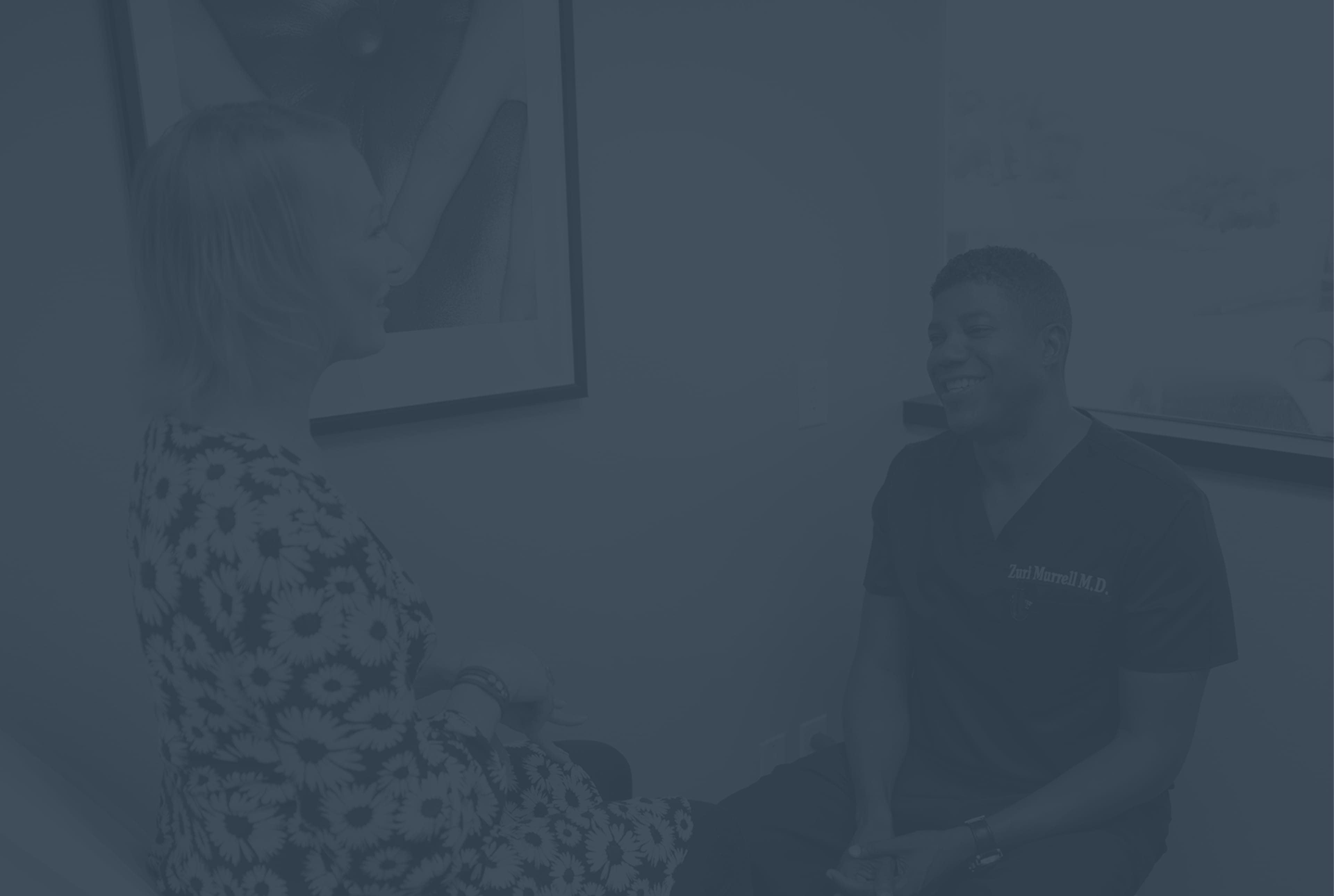
Dr. Murrell with patient
UCLA David Geffen School of Medicine - Dr. Zuri Murrell
Harbor Medical Center UCLA
UCI Logo
Director of the Colorectal Cancer Center at Cedars-Sinai - Dr. Zuri Murrell
American Board of Colon and Rectal Surgery - Dr. Zuri Murrell
Find a top doctor badge
top doctor virtual plaque
Schedule a Consultation

Get Started Send Us A Message

We are thrilled to announce that we getting ready to welcome you to our brand-new office space! This new location marks an important milestone for us, and we can't wait to welcome you into our modern and inviting space.

Save the Date: October 2, 2023 New Address: 200 N Robertson Blvd Suite 200, Beverly Hills, CA 90211 Contact Us: 323-310-1137

Starting October 2, 2023, we'll be ready to serve you better than ever. Our team is dedicated to providing top-notch service and expertise, and our new office allows us to do just that in a more convenient and comfortable environment.

Follow us on INSTAGRAM to see the progress of our new office!